Rust solo survival works when one player holds a monument and turns neighbors into allies
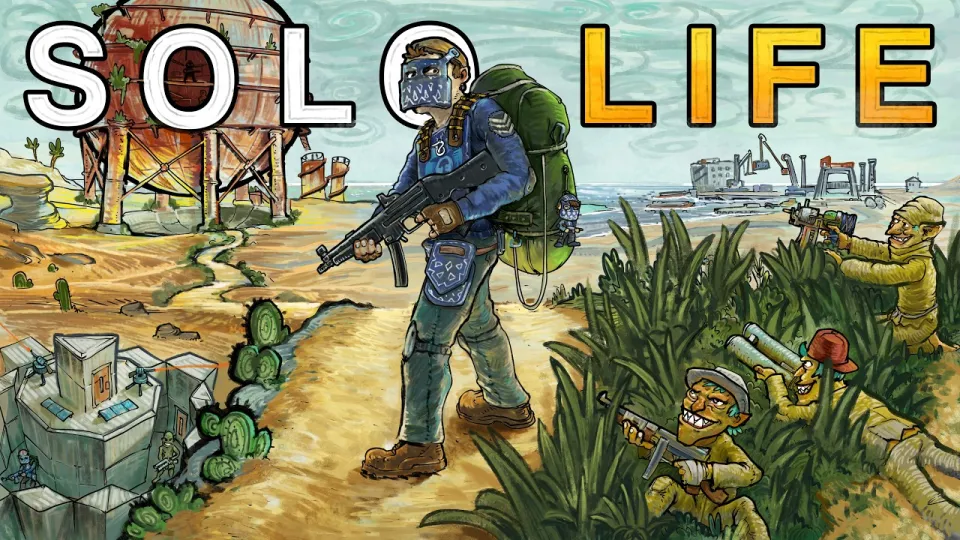
Video: Rust - THE SOLO LIFE V16
Need articles like this for your video? They help promote it on YouTube and Google — order them in the Telegram bot @sat_sit_bot. It writes articles around your video, embeds the video and publishes them on popular niche websites (no ads). Free trial — 50 articles.
· based on the channel Blooprint
Key takeaways
- Blooprint's The Solo Life V16 shows a fully solo run built around holding one high-value monument instead of spreading thin across the map.
- The main threat is not the monument itself but multiple angry neighbors reacting to a solo player camping loot and crates.
- Solo raiding and solo raid defense both appear in the same run, which is the hardest combination to pull off without teammates.
- A friendly neighbor becomes the deciding factor in the big defense, showing that diplomacy is a real solo survival tool.
- The episode follows A Solo's Journey 4, continuing a series where solo play is the whole format, not a side challenge.
Rust solo survival means one player alone holds a contested monument, farms its crates and defends the position against several hostile neighbors at once, using base placement, timing and the occasional truce instead of a team. Blooprint's The Solo Life V16 is built entirely around that idea, and anyone can pick up War Thunder for free through the sponsor link from the video while the run plays out.
The episode lands right after A Solo's Journey 4, and the format is unchanged on purpose: no squad, no second account, no backup. Everything below breaks down what actually makes that kind of run survivable, from monument choice to the moment a raid defense turns into a two-player stand.
Why holding a monument solo beats roaming in Rust
A monument hold gives a solo player a fixed, repeatable source of crates, components and PvP pressure, which is far more efficient than driving around the map hoping for fights. The trade-off is visibility: the moment you start looting the same tier-two or tier-three monument on a loop, every nearby group notices.
That is exactly the situation the video sets up. The narrator frames the run as holding an overpowered monument while fending off multiple angry neighbors, and the tension comes from the fact that a monument is a magnet. For a solo, the useful rules are:
- Pick a monument with at least two exits so you are never funnelled into one doorway.
- Build the base within a short run of the monument, but not directly on top of it, so you are not the first thing raiders see.
- Loot on a schedule, not constantly, and rotate the crates you hit first.
- Keep a small stash of rockets, meds and ammo outside the main base so a single raid does not end the run.
Holding ground also means accepting that you will lose fights. A solo who trades one-for-one at a monument still comes out behind, because the group can respawn from a nearby bag and you cannot.
Reading the neighborhood before the first fight
Neighbors decide how a solo run ends, and the video's central conflict is a group of players who decide the monument is theirs. Before committing to a hold, scout the area on foot and note three things: how many bases are active, which ones show furnaces running at night, and where the nearest respawn bags likely sit.
A practical scouting routine for a solo:
- Walk the monument perimeter twice at different times of day and count doors that open.
- Check roof and tower angles that overlook the crates you plan to farm.
- Note the direction players run when they leave, which usually points to their base.
- Identify one fallback route you can take while carrying loot, ideally through cover rather than open road.
Blooprint's run shows the payoff of that homework: the fights happen on ground he already knows, and the escapes are short rather than cross-map sprints.
Solo raiding without a team to cover you
Solo raiding in Rust is a logistics problem more than a combat one, because you cannot guard a breach and haul loot at the same time. The video includes solo raids alongside the monument hold, and the pattern that makes them work is simple: hit small, hit quiet, and leave the moment the counters show up.
Useful habits for a one-player raid:
- Raid at low-population hours and pick targets you have already scouted from outside.
- Bring only the explosives you need for the first wall, plus one backup plan.
- Stage loot hauling with a nearby stash or a parked vehicle instead of running back and forth in the open.
- Expect counters, and set a timer: if the raid is not through the second wall by then, leave.
A solo raid that fails is usually one that lasted too long, not one that used too little sulfur.
How a solo raid defense actually gets won
The raid defense in the episode is the standout sequence, and it turns on a detail that solo players often ignore: the defender does not have to win alone if a neighbor decides to help. A friendly player nearby joins the fight, and the defense becomes a two-person stand against the attackers.
What a solo defender should prepare before the rockets arrive:
- Peek windows and a shooting floor that let you hit the raid base without exposing your whole body.
- A bag inside the base and a second bag outside it, so death does not mean the end of the defense.
- Enough meds and ammo to fight three separate engagements, because raids arrive in waves.
- A quick way to message or talk to neighbors, since a truce is cheaper than a rebuild.
The video's own framing is that two solos with a shared interest held the line. That is the realistic version of a solo defense: you are not a team, but you can be a temporary alliance.
Base and loadout choices that keep a solo run alive
A solo base in Rust should be cheap to rebuild and annoying to raid, not impressive. The video's run leans on a compact starter-style build early and expands only when the loot justifies it, which is the correct order for one player.
A workable checklist:
- Start with a small, honeycombed core and upgrade the core to stone or metal before adding rooms.
- Keep the loot room away from the front door and split valuables across two rooms.
- Store a full backup kit, a repair bench and basic explosives mats in a secondary stash.
- Use turrets or traps only where they slow attackers down rather than where they look good.
On gear, the run mixes cheap kits for monument farming with heavier gear for raids and defenses. A solo who brings a full kit to every fight runs out of kits; a solo who brings nothing never wins a defense.
Common questions solo players ask about this run
Most doubts around the episode come down to whether the format is repeatable on a normal server rather than a staged one. The honest answer is that the structure is repeatable, but the pace is not: holding a monument solo invites pressure, and the video's run is a good example of how much of a session gets spent reacting to neighbors rather than farming.
Another frequent point of confusion is the dark scenes. Night fights in Rust are genuinely hard to read, and the episode does not pretend otherwise, so the takeaway is to plan around darkness rather than fight through it: move loot, repair, and reposition at night, and take the monument crates in daylight.
Players also ask about the friendly neighbor. Running into a competent solo nearby is rare, and the video treats that encounter as the reason the defense held. Building that relationship early, before the raid, is what turns a stranger into an ally.
Useful links
- War Thunder free pickup, PC and consoles: https://wtplay.link/blooprint
- War Thunder mobile: https://wtm.game/blooprint
- Twitch: https://www.twitch.tv/blooprint
- Kick: https://kick.com/blooprint
- TikTok: https://www.tiktok.com/@blooprintgames
What The Solo Life V16 proves about playing alone
The episode makes a clear case that solo Rust is a discipline rather than a handicap: choose one valuable piece of ground, learn the neighbors, keep the base cheap, and treat every fight as something you can walk away from. The monument hold creates the fights, the base survives them, and the raid defense is won by a temporary alliance rather than by outgunning a group. Blooprint's channel is the author of this breakdown, and the run itself is the evidence. If you want to support the channel and grab the sponsor bonus, use the War Thunder signup link from the video description.
Questions & answers
Can you really hold a monument alone in Rust without a team?
Yes, but only with preparation. A solo hold works when the base sits close enough to the monument for quick escapes but not on top of it, when loot runs happen on a schedule, and when a fallback stash exists outside the main base. The pressure comes from neighbors who notice the pattern, so expect to spend more time defending than farming.
How do you survive a raid defense as a solo player?
Build for the defense before it happens: peek windows, a shooting floor, a bag inside and outside the base, and enough meds for several waves. The other half is social, since a nearby friendly player can turn a losing defense into a two-person stand, which is exactly what happened in the video's raid.
Is solo raiding worth it compared to farming monuments?
Solo raiding pays off when it is small and quiet: one target, a short window, and a stash nearby for hauling loot. Long raids invite counters you cannot fight alone, so set a time limit and leave if you are not through the second wall.
Why are night scenes so hard to see in these Rust videos?
Rust's night cycle is genuinely dark, and even with night vision the visibility stays limited, which is why viewers and players both complain about it. The practical approach is to use darkness for logistics such as moving loot or repairing, and to take monument crates during daylight.
Source: Rust - THE SOLO LIFE V16 · Markdown version